Interview with Marienberg Architect Antti Nousjoki: ‘Helsinki Could Have More Estonian-Style Dynamism’
Marienberg is set to become a community hub with cosy cafés and restaurants, a local grocery shop, a kindergarten, a green promenade and a wide range of leisure and sports opportunities. The architectural concept for Marienberg was designed by the highly acclaimed Finnish architectural firm ALA Architects, led by Antti Nousjoki. We spoke with Antti to learn more about the story behind the creation of Marienberg.
Please introduce yourself briefly. How did you become an architect and what values guide your work as an architect?
My maternal grandfather was a rakennusmestari – a construction manager for many major buildings in Southern Finland. I visited construction sites with him often, climbing cranes, exploring machinery and different tools. My paternal grandfather was a bricklayer and we lived in a house that he had built himself – a truly beautiful contemporary 1950s bungalow-style brick house. Although I did not know any architects before starting my studies, I knew that I would become one. I strongly believe that, in order to improve society, we need to work together. We do not simply have to accept things as they are. Everyone can contribute to society through their own skills and role, helping us move forward together. At our company ALA, we have a strong conviction to create meaningful, practical and highly functional buildings, and to be active and productive in building better communities. Instead of just cheering from the sidelines, we want to be at the heart of the game, taking action and scoring goals from time to time.
To begin, take us on an imaginary walk into a time when Marienberg has already been completed. What would a visitor see, hear and feel?
ALA Architects won the architectural competition for the Marienberg neighbourhood. Why did you decide to take part and what inspired the design of the project?
The Marienberg area, currently occupied by old exhibition halls, presents a great opportunity for the development of Tallinn, being only a short bike ride from the city centre. It is therefore an excellent location for creating a sustainable residential area and we saw it as the right challenge for us. We also knew the client and were confident that they wanted to do something ambitious and beautiful with the area.
Please describe the creative process behind Marienberg. Did you visit the site to gain a better understanding of it?
We explored the area extensively to understand how the new buildings relate to the surrounding landscape, to imagine both more lively and quieter spaces, and to assess the existing trees and landscape features. However, most of the creative work is the result of systematic analysis and collaboration, involving the creation of drawings, diagrams and 3D models to explore and contrast different ideas and concepts, in order to find the underlying core concept that runs through all the material. This requires patience, teamwork and strong communication.
How would you describe the architectural concept of Marienberg and how does it fit into the surrounding area?
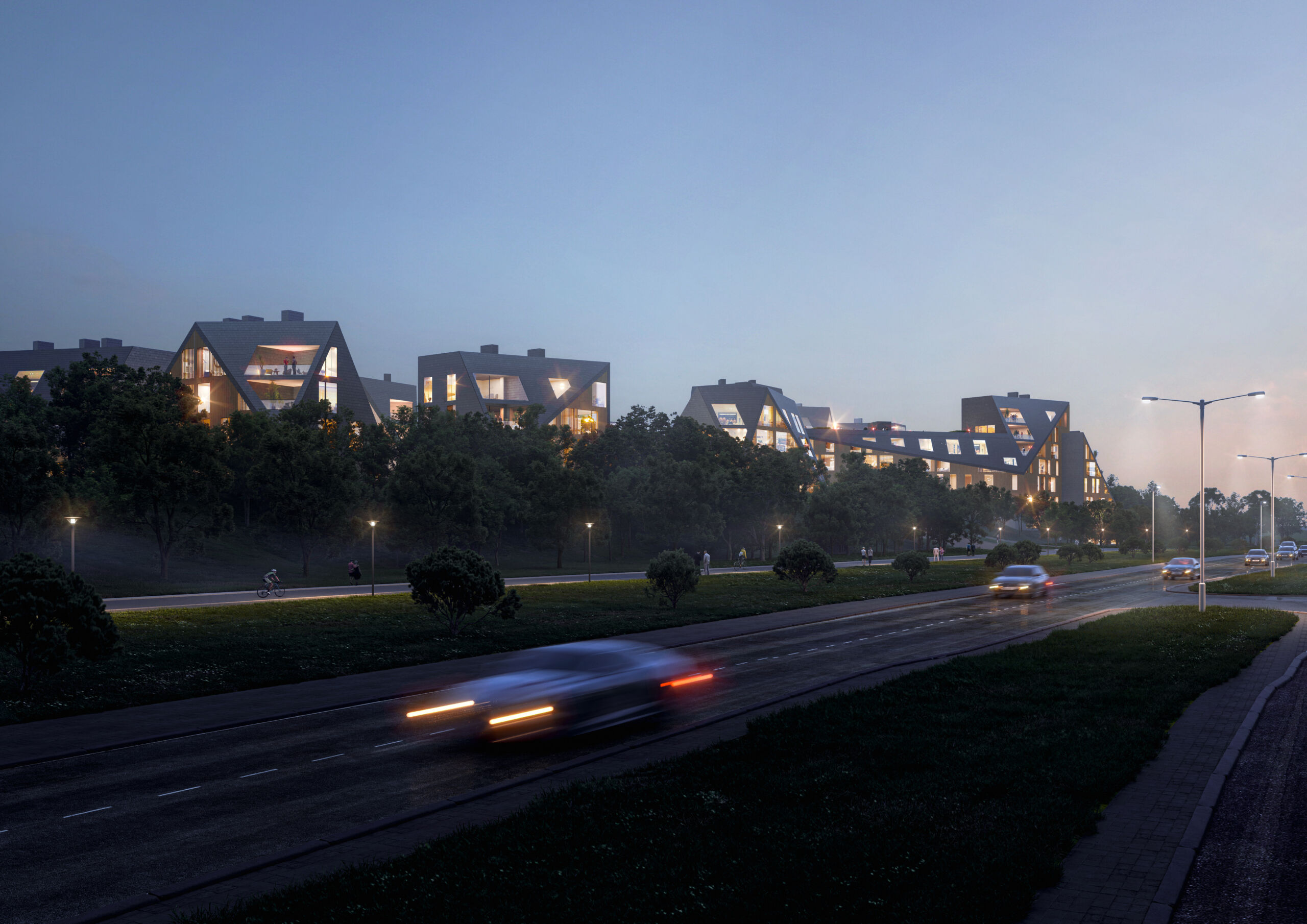
At the heart of the concept are distinctive urban villa-type residential buildings – homes that emerge between the trees. These 4- to 6-storey buildings share a common design language, but each has a distinctive shape and uses different materials. The buildings are positioned in relation to one another so that every apartment has a view that is not directly facing the windows of other buildings. Together, the urban villas form a cohesive whole with the low-rise buildings planned for the area, complementing one another and blending seamlessly into the urban space. The result is a vibrant residential area with a distinct visual and emotional identity typical of suburban living, featuring distinctive houses with sloped roofs, which in turn help foster a sense of community and belonging.
How does a well-thought-out architectural concept contribute to building a sense of community and preventing neighbourhoods from becoming anonymous bedroom communities?
When we consider, for example, the prominent and beloved residential areas in central Helsinki, the best of them have a distinctive style and identity, shaped by both the design of the buildings and the way the architectural solutions relate to the surrounding landscape and nature. In neighbourhoods such as Käpylä or Suvikumpu, residents are very proud of where they live, take care of their surroundings and actively contribute to their development, proudly showing them to visitors and new residents. Marienberg is of an ideal scale to create a similarly distinctive community.
Sustainable solutions are becoming increasingly important in all sectors. What are the key trends in sustainable residential development today?
We must do everything we can to minimise the carbon footprint of new developments. At the same time, it is essential to ensure that the natural resources we use and the emissions we generate contribute to the creation of high-quality, long-lasting buildings that are durable and adaptable to future needs. Reducing energy consumption is equally important, as is more thoughtful storm water management and careful consideration of the microclimate.
You visit Tallinn often. From an architect’s perspective, how do you assess the development of its urban space, particularly in terms of sustainability and the creation of a people-friendly environment? What do you like and where is there room for improvement? What can Estonians learn from the Finns?
First of all, I have to say that Estonians are much more forward-looking and bold in the way they approach new developments. As architects, developers and homebuyers, Finns tend to be far more conservative. This gives Tallinn the opportunity to take bigger and more ambitious steps towards building a more sustainable, liveable and functional city. At the same time, however, it has also enabled the realisation of some projects whose relevance may be questionable. This highlights the importance of carefully considering the selection of architects, and perhaps also engaging more deeply with the local discourse to better understand the level of ambition behind development projects in Tallinn. At the same time, I would like to see more of this kind of Estonian-style dynamism in Helsinki.